
It's the family holiday
Many people go back to their hometowns for New Year, roughly December 29 to January 3. Tokyo gets noticeably quieter.
New Year (shōgatsu) is the biggest holiday of the year in Japan, and it's very different from New Year's Eve back home. It's quiet, family-centred and full of small traditions. Here's what to expect, and how to make plans if you're staying in the city.
Many people go back to their hometowns for New Year, roughly December 29 to January 3. Tokyo gets noticeably quieter.
Many offices, banks and smaller restaurants close for a few days. Convenience stores, big chains and most department stores stay open, often with special New Year sales.
Eating soba on New Year's Eve is a tradition, said to carry you over into the new year.
Families eat osechi, a box of special New Year dishes, and spend the first days resting, visiting shrines and watching TV.
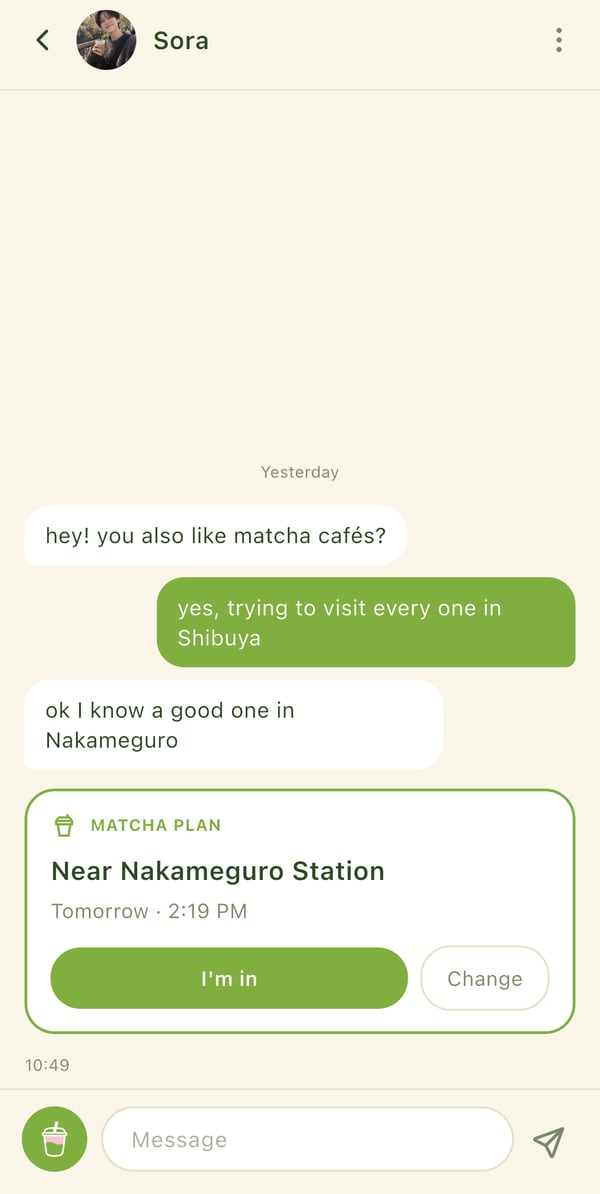
Buy Me a Matcha shows you people in Tokyo who speak English and also want new friends. You match, pick a café, and meet one-on-one over a matcha. Free, and not a dating app.
Yes. It's the most important holiday of the year. Many people take several days off around December 29 to January 3 and go back to their families.
Convenience stores, many chains and most department stores are open, often with New Year sales. Some smaller restaurants, offices and banks close for a few days.
Hatsumode is the first visit to a shrine or temple in the new year. People pray for the year ahead, buy charms and draw fortunes (omikuji). The first three days of January are the busiest.
Many people spend the moment at a temple listening to the New Year bells, at home with family, or at a countdown event. Check this year's events, since they change from year to year.
Join a shrine visit or a small dinner with others who are staying. Many international residents are in the same position, so a simple invitation in December usually works.