JR lines
Run by JR East. The green Yamanote Line loops around central Tokyo and connects most of the big hubs: Shinjuku, Shibuya, Tokyo, Ueno, Ikebukuro.
The Tokyo train map looks like a bowl of colourful spaghetti the first time you see it. The good news: riding it is much easier than reading it. Trains are frequent, signs are in English, and a single IC card on your phone takes you almost anywhere. Here's how the system works, the small manners locals notice, and when to ride (and when not to).
Run by JR East. The green Yamanote Line loops around central Tokyo and connects most of the big hubs: Shinjuku, Shibuya, Tokyo, Ueno, Ikebukuro.
Two subway companies with colour-coded lines and station numbers like G09 or M17. If you can't read a station name, the number is enough.
Companies like Tokyu, Odakyu and Keio run trains out to the suburbs and many popular neighbourhoods.
Local trains stop everywhere. Rapid and express trains skip stations. Check the sign on the platform or your app before you hop on.
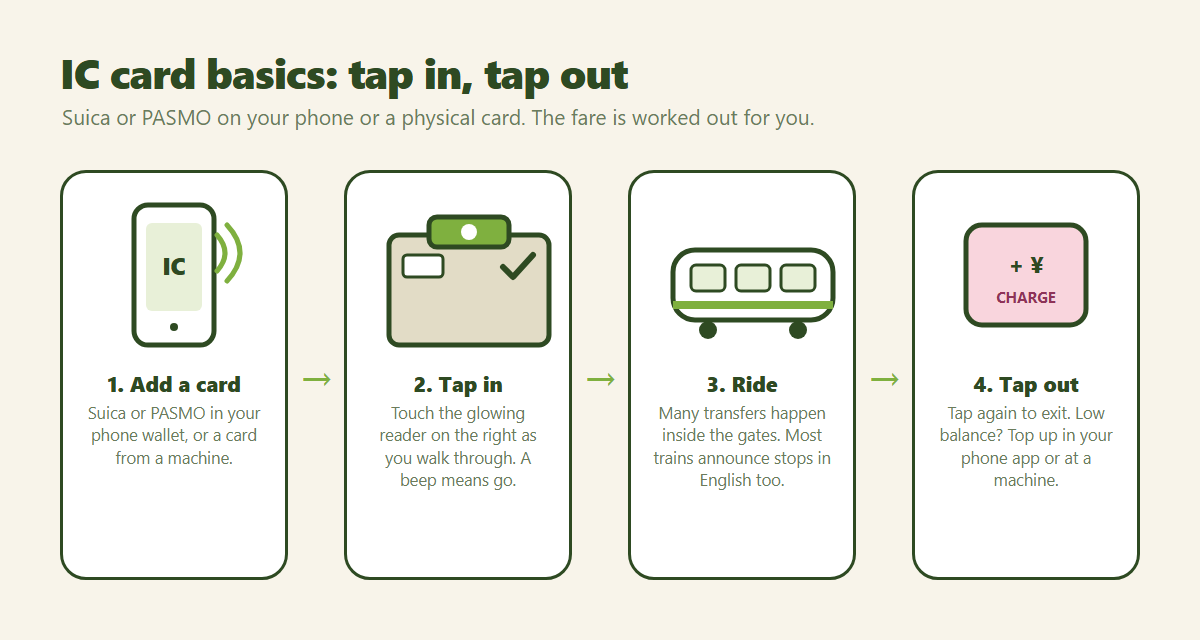
Your IC card handles transfers between companies automatically. Sometimes you exit one set of gates and enter another; just follow the signs.
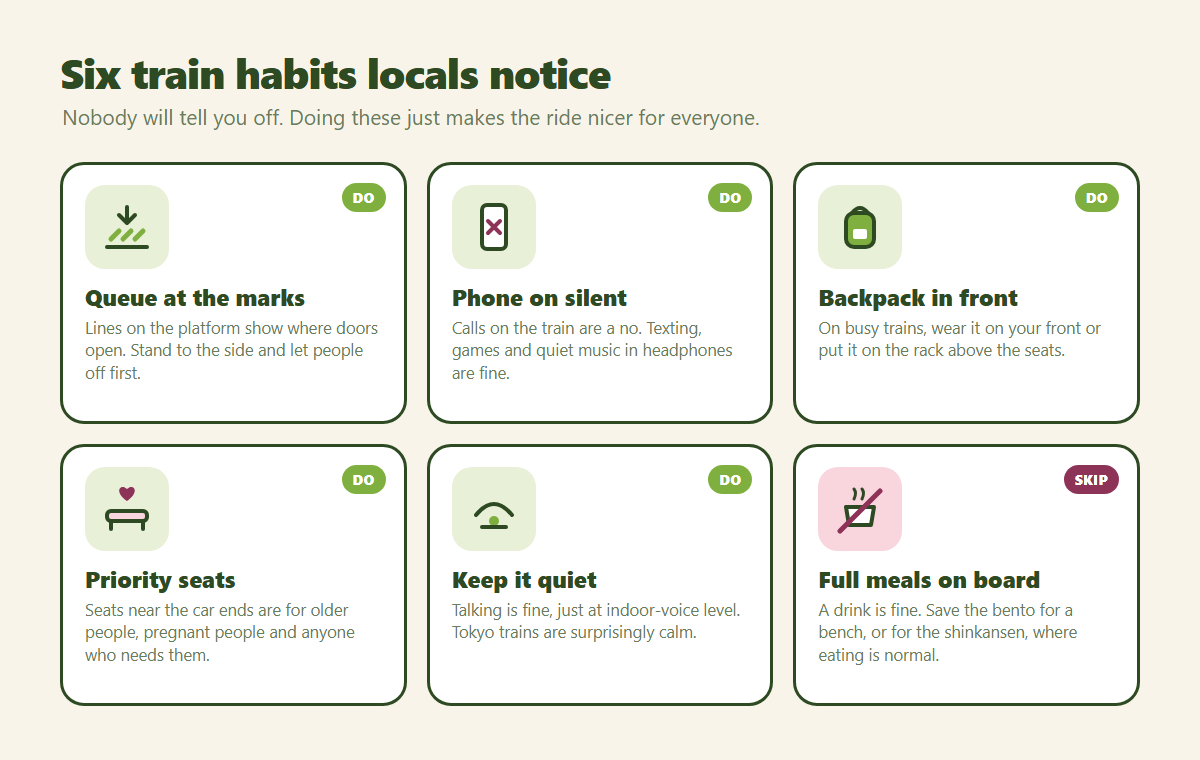
Station names, platform signs and most onboard screens and announcements are in English, so you're rarely guessing.
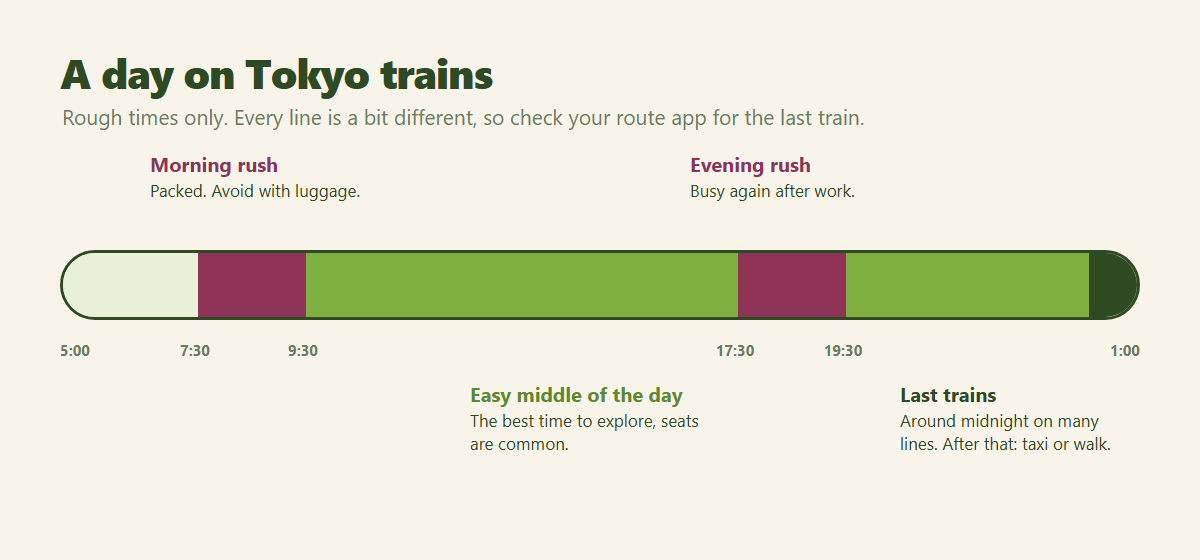
Weekday mornings are famously packed, especially on lines into the centre. If you can, travel a bit later, and avoid rush hour with big luggage.
On many lines, some cars are women-only during the morning rush. They're marked in pink on the platform and the train. They're one of the reasons many women feel comfortable here; see our Tokyo solo female travel safety guide for more.
Most trains stop around midnight, and the very last trains are often crowded. Check the time in your app before the night gets late.
Taxis, a late-night ramen and a walk, karaoke or a 24-hour café until the first train. It happens to everyone once.
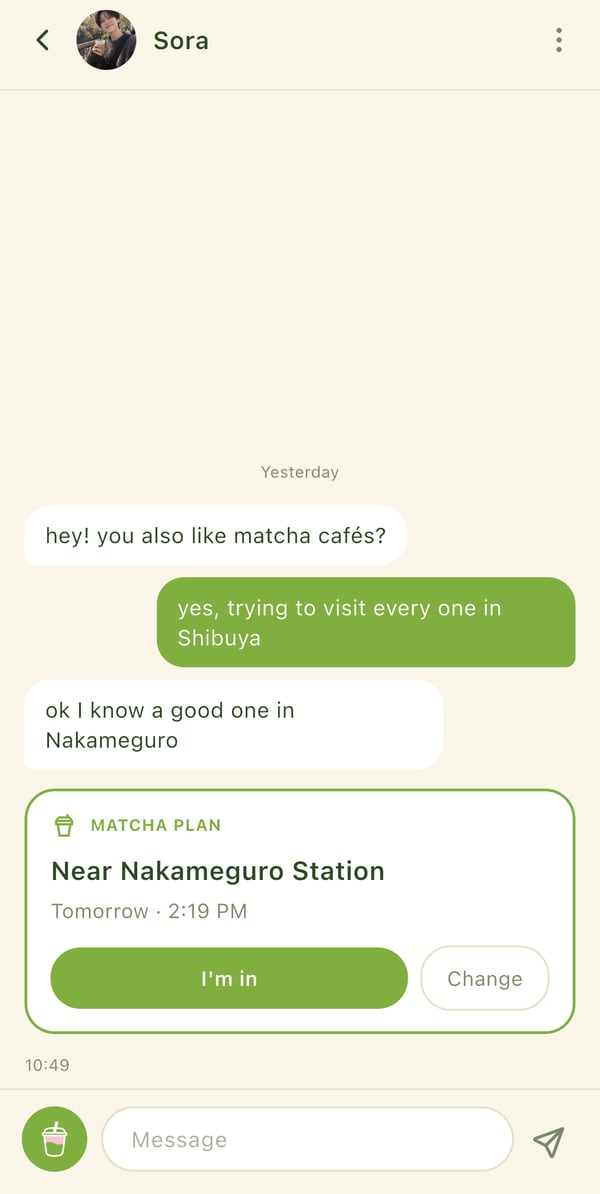
In Tokyo, people don't usually meet "at the café". They meet at a station exit, then walk together. Saying "Shibuya Station, Hachiko exit" or "Nakameguro, main exit" is how most plans start. It's also how friendships start: choose a station between your two homes, meet at the exit, and get a coffee nearby. If you're picking where to live, our best neighbourhoods for foreigners guide helps you pick an area by vibe, and our 3-day solo itinerary shows how to use the Yamanote Line to see a lot in a short time.
Buy Me a Matcha is the only app made for English speakers to make real friends in Japan. Pick your area by station, see people nearby who also want new friends, and if you both send a matcha, choose a café near the station and meet one-on-one. It's friends only, never dating.
It's the easiest way to ride. An IC card like Suica or PASMO, on your phone or as a physical card, works on almost all trains, subways and buses in Tokyo, and you don't need to buy individual tickets.
Not really. Signs and announcements are in English, stations have numbers, and route apps tell you which platform and exit to use. Most visitors are comfortable after a day or two.
Most lines run their last trains around midnight and start again early in the morning. The exact last train depends on the line, so check your route app.
Phone calls are considered rude on trains in Japan. Set your phone to silent mode and use messages instead. Talking quietly with the person next to you is fine.
On many lines, some cars are reserved for women during the morning rush hour. They're marked in pink on the platform and on the train.