
Travel eSIM
Bought online and installed by scanning a QR code, often before you fly. Usually data only, which is all most visitors need for maps, translation and messaging apps.
Getting your phone working is one of the first things you'll do in Japan, and one of the most confusing. Visiting for two weeks? That's easy. Moving here? Then you'll want a Japanese phone number, and that comes with paperwork. This guide walks you through the options in plain English, so you can pick the right one and get back to exploring. Plans and prices change often, so treat this as a map and check current plans before you sign up.
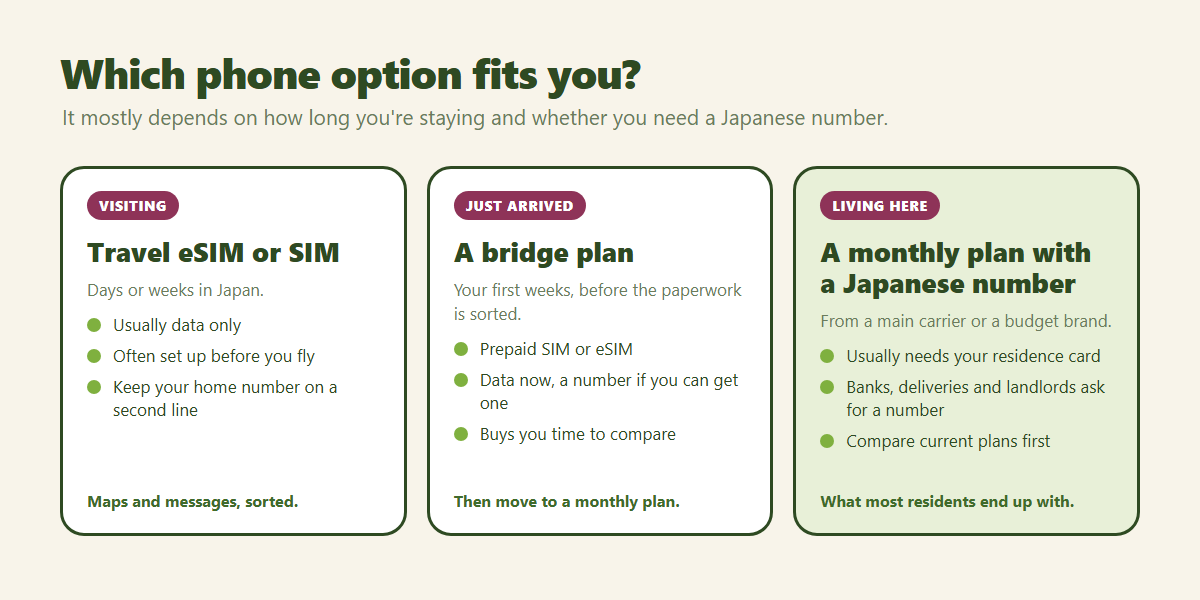
Bought online and installed by scanning a QR code, often before you fly. Usually data only, which is all most visitors need for maps, translation and messaging apps.
A physical card you can buy at airports and large electronics stores. Handy if your phone doesn't do eSIM. Again, usually data only.
A small rented router you carry around and return at the end of your trip. Nice for groups sharing one connection, but it's one more thing to charge.
What residents use: data plus a Japanese phone number, from one of the main carriers or a cheaper budget brand. Usually needs your residence card and a payment method.
If you're living here, a data-only plan gets awkward fast. A Japanese number (mobile numbers start with 070, 080 or 090) is something you'll be asked for again and again: opening a bank account, applying for an apartment, getting deliveries, signing up for many apps and services that send a code by text. Most people in Japan also use LINE for messaging, and signing up for it needs a phone number too. So if you're moving here, plan for a monthly plan with a number, and treat any travel eSIM as a bridge for your first few weeks.
Japan has four big mobile networks: docomo, au, SoftBank and Rakuten Mobile. They have shops all over the city, and some offer help in English.
Cheaper plans, often called kakuyasu SIM (格安SIM), run on those same networks. Many are online-only, which keeps prices down but can mean less help in person.
Price, how much data you get, whether you can sign up in a shop or only online, what payment they accept, and how much English support there is. Compare current plans before you choose.
Data-only plans are cheaper but don't give you a number to call from; some include SMS. Voice plans give you a full Japanese number.
With data and a number sorted, Tokyo opens up: route apps for the trains, the apps foreigners actually use in Japan, and LINE for chatting with new friends. Our first month in Tokyo guide covers the rest of the setup, from the konbini to the coin laundry. And if you're moving to Tokyo alone, the next thing on the list is usually people to explore it with.
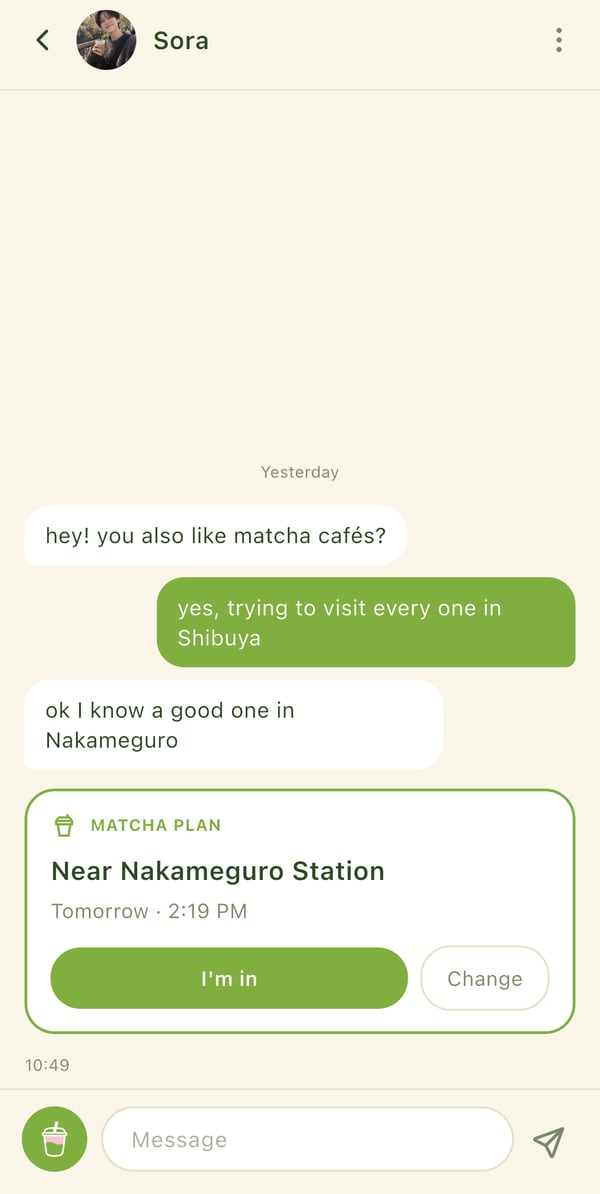
Buy Me a Matcha is the only app made for English speakers to make real friends in Japan. See people near your station who also want new friends, send a matcha, and if they send one back, pick a café and meet one-on-one.
If your phone supports eSIM, it's usually the easiest option: no card to swap, and travel eSIMs can be installed before you fly. A physical SIM is fine too, and is the choice if your phone doesn't support eSIM.
Usually not. Most travel SIMs and eSIMs are data only, which is enough for maps and messaging apps. If you need a Japanese phone number, you'll generally need a plan that includes voice.
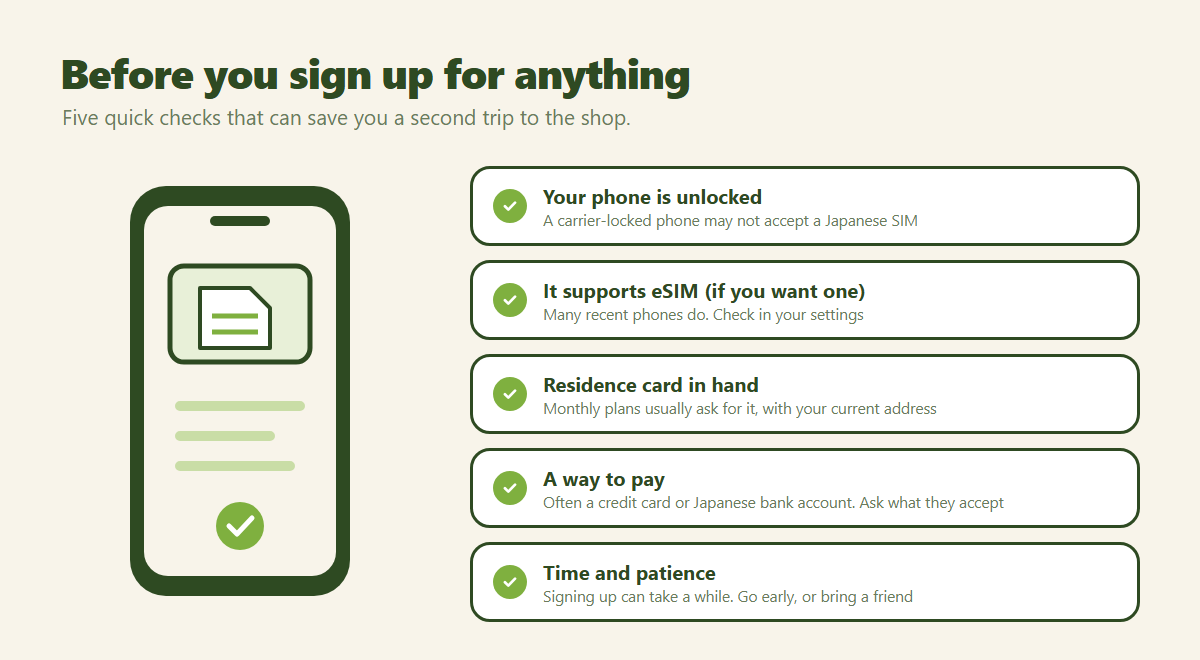
For a monthly plan, usually your residence card with your current address, a payment method such as a credit card or Japanese bank account, and an unlocked phone if you're bringing your own. Requirements differ by provider, so check before you go.
Many things in Japan ask for one: bank accounts, apartment applications, deliveries, and apps that send a verification code by text, including LINE. If you're living here, a plan with a number makes daily life much easier.
Yes, if it's unlocked and works on Japanese networks. Most recent smartphones do. Check your carrier lock status before you leave, and check roaming costs if you keep your home SIM active.