Sento
A neighbourhood public bath, traditionally for people whose homes had no bath. Usually heated tap water, sometimes natural spring water. Small, local, and the adult price is set across Tokyo, so it's the same at most sento.
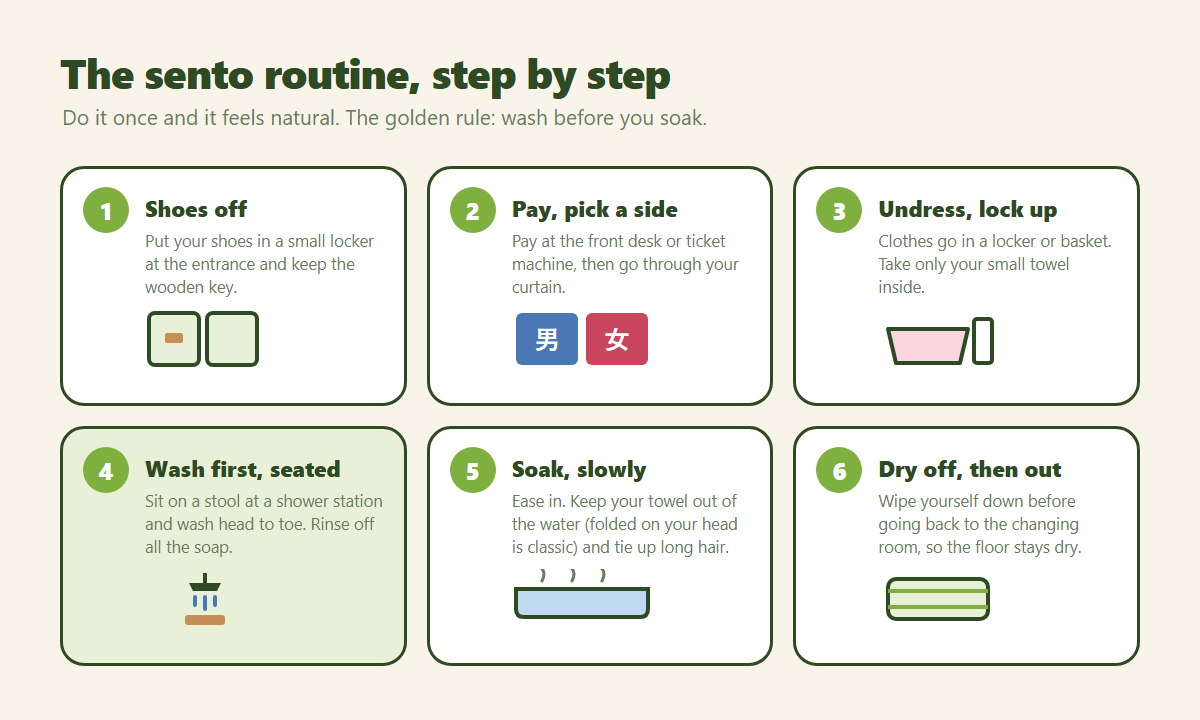
Tucked between apartment blocks all over Tokyo are neighbourhood bathhouses called sento: big hot baths, a painted mountain on the wall, and locals of every age unwinding after work. Going for the first time can feel intimidating, mostly because you don't know the routine. Once you do, it becomes one of the most relaxing, most Tokyo things you can do, often for less than the price of a coffee and a cake. Here's exactly how it works.
A neighbourhood public bath, traditionally for people whose homes had no bath. Usually heated tap water, sometimes natural spring water. Small, local, and the adult price is set across Tokyo, so it's the same at most sento.
A bath that uses natural hot spring water. Famous onsen towns are outside the city, but some Tokyo bathhouses have spring water too, including the dark brown "black water" found in parts of the city.
Bigger leisure complexes with many baths, saunas, restaurants and relaxation rooms. Easy for beginners, but they cost more and feel less local.
Many sento now have a sauna and a cold plunge bath, sometimes for a small extra fee. Sauna, cold bath, rest, repeat is a whole hobby in Japan.
A sento is one of the best things to do alone in Tokyo: nobody expects conversation, and you walk out feeling like a new person. It's also a lovely plan with a friend, especially on a cold or grey day; pair it with our rainy day plans. Because the baths are split by gender, a sento visit is a natural plan with a friend of the same gender: soak separately, then meet in the lobby for a cold milk and a chat. If you're visiting Japan, add one to your solo trip list; it's the kind of everyday Tokyo that guidebooks skip.
Buy Me a Matcha is the only app made for English speakers to make real friends in Japan. Turn on "Only women" if you prefer, see people nearby who also want new friends, and meet one-on-one over a matcha first. Next time, maybe the sento.
A sento is a neighbourhood public bathhouse. You wash at a shower station, then soak in large shared hot baths. Baths are separated by gender and you bathe without a swimsuit.
An onsen uses natural hot spring water, while a sento is a public bath that usually uses heated tap water. Some sento in Tokyo do use natural spring water, so the line can blur.
Often, yes. Many neighbourhood sento are relaxed about tattoos, but some bigger facilities still restrict them. Check the sign at the entrance or ask the staff before paying.
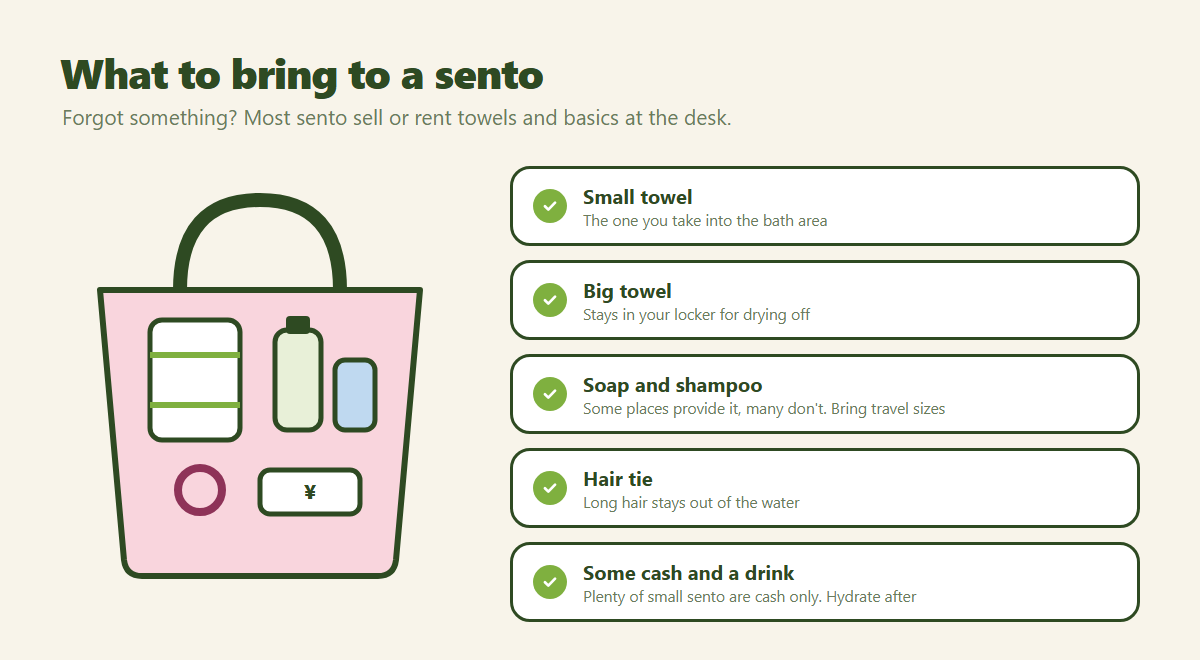
A small towel, a big towel, soap and shampoo, a hair tie if you have long hair, and some cash. If you forget something, most sento sell or rent towels and basics at the front desk.
Yes. Swimsuits are not worn in Japanese public baths. Everyone washes first, and the baths are separated by gender, so it quickly feels normal.