No dryer at home
Many Japanese homes have a washing machine but no dryer, and laundry is hung on the balcony. When it rains for days, a dryer at the coin laundry saves the week.
Sooner or later, almost everyone in Tokyo ends up at a coin laundry. Maybe your apartment has a washing machine but nowhere to dry things during rainy season, maybe you need to wash a duvet, or maybe you've just arrived and don't own a machine yet. The good news: Japanese laundromats are clean, calm and easy once you can read the buttons. Here's exactly how they work.
Many Japanese homes have a washing machine but no dryer, and laundry is hung on the balcony. When it rains for days, a dryer at the coin laundry saves the week.
Duvets, blankets and winter coats don't fit a small home machine. Coin laundries usually have large machines made for exactly this.
Apartments often come with a space for a washing machine but no machine. Until you buy one, the coin laundry is your laundry room.
A wash-and-dry machine finishes a whole load in one go, which is handy before a trip or after one.
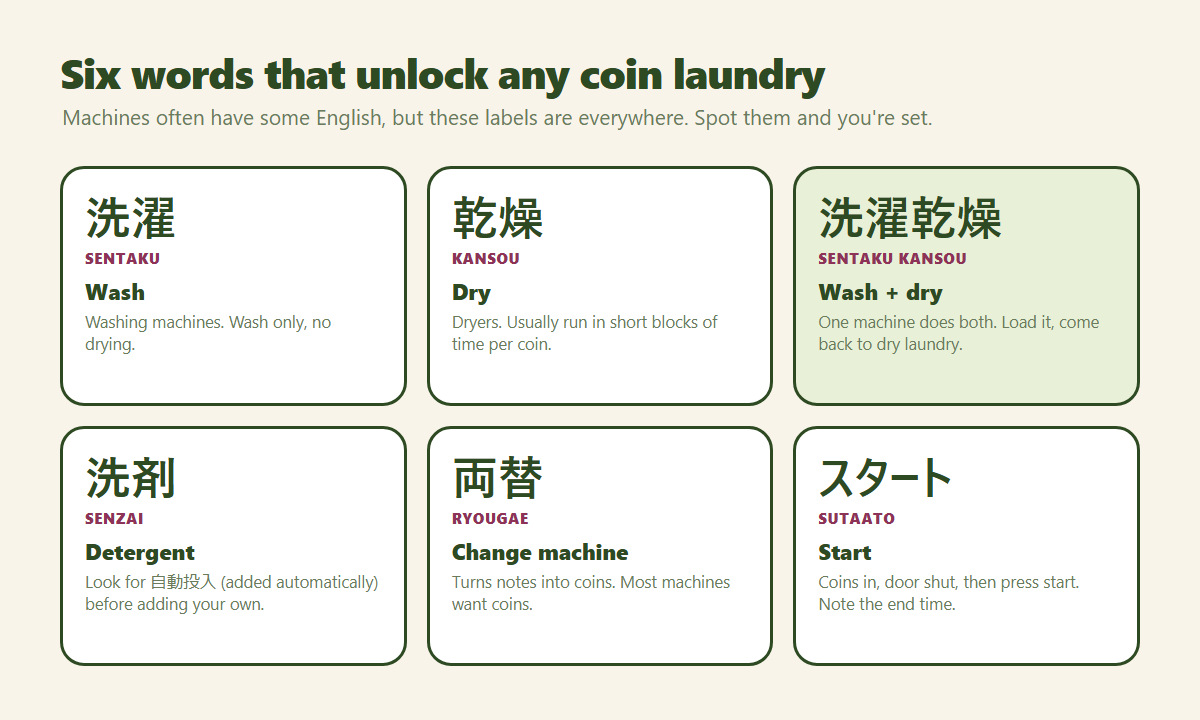
Washes and spins, nothing more. Good if you plan to hang your clothes at home.
Usually the big drums stacked on the wall. They often run in short blocks of time per coin, so you can add more time if things are still damp.
One machine that washes and then dries. The easiest choice for a first visit: load it, pay once, come back to dry clothes.
Some laundries also have machines just for sneakers, or extra-large drums for futons and bedding. Look for the signs, and only put shoes in a shoe machine.
There's something very Tokyo about the coin laundry: quiet, tidy, a little bit cosy on a rainy night. Pair it with a walk to the konbini for a hot drink while you wait, or end the evening at a neighbourhood sento and come home with everything clean, including you. If you've just arrived, our first month in Tokyo guide covers the rest of the basics, our SIM and eSIM guide gets your phone sorted, and if you're living in a share house, laundry day is one of the easiest times to chat with housemates.
Buy Me a Matcha is the only app made for English speakers to make real friends in Japan. See people near your station who also want new friends, send a matcha, and if they send one back, pick a café and meet one-on-one. Maybe the one next to the laundromat.
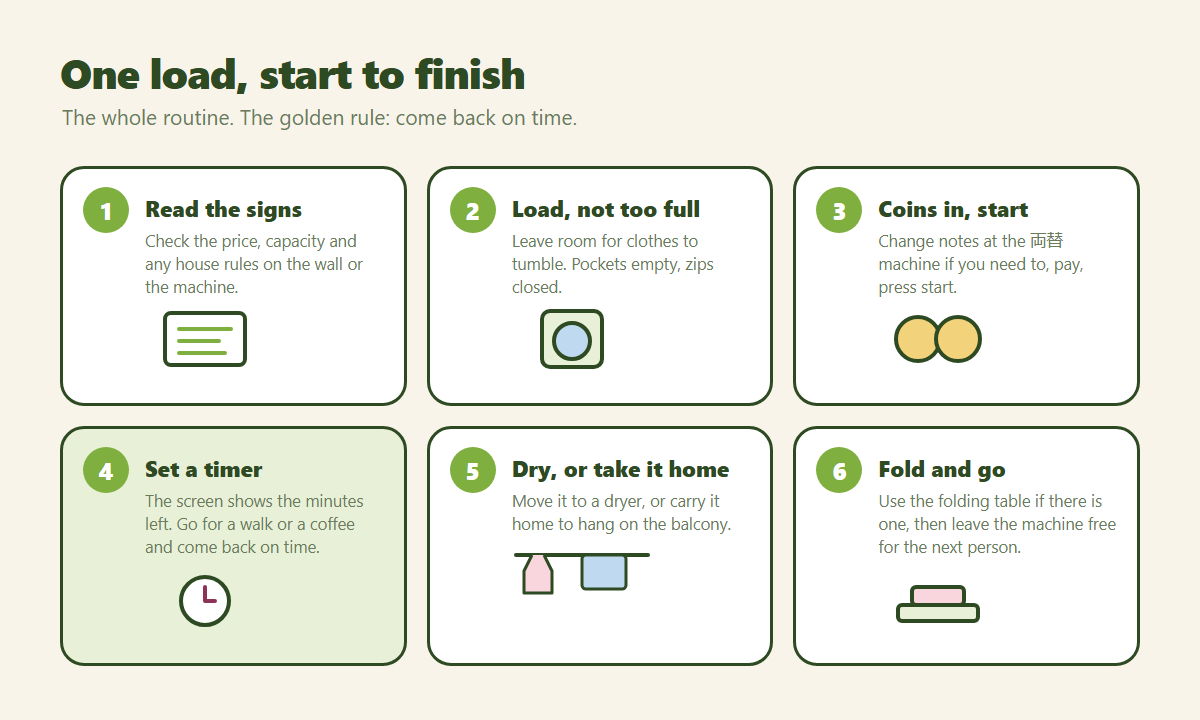
You load your clothes into a washer, dryer, or combined wash-and-dry machine, pay with coins (usually 100-yen coins, with a change machine for notes), and press start. The screen shows how many minutes are left. Many machines add detergent automatically.
Often not. Many machines add detergent and softener automatically; look for 自動投入 or 洗剤不要 on the machine. If not, many laundries sell small packs from a vending machine.
Usually, yes. Many coin laundries have large washers and dryers made for bedding. Check the sign on the machine for what it can take.
洗濯 (sentaku) is wash, 乾燥 (kansou) is dry, 洗濯乾燥 is wash and dry, 洗剤 (senzai) is detergent, 両替 (ryougae) is the change machine and スタート is start.
Many people leave while the machine runs and come back when it finishes. Coin laundries generally feel safe, but keep your valuables with you and come back on time, because someone waiting may take your finished load out.